


From personal tragedy to global innovation: How Mary-Brenda Akoda built AI that cuts MRI scan time by 90%
By OFFOR CALLISTUS, Abuja
Three years ago, Mary-Brenda Akoda experienced a painful moment that would later redefine her life’s mission.
An elderly loved one suffered a stroke and needed urgent medical attention. But while every second mattered, the wait for a critical MRI scan became a race against time.
The queues were long. The diagnosis was delayed. The patient’s condition worsened.
Eventually, he died.
For many families, such an experience would remain a painful memory. But for Akoda, it became the motivation to search for a solution to one of healthcare’s biggest challenges — delayed access to medical diagnosis.
Today, that personal loss has transformed into a scientific breakthrough that could change the future of medical imaging in Nigeria and beyond.
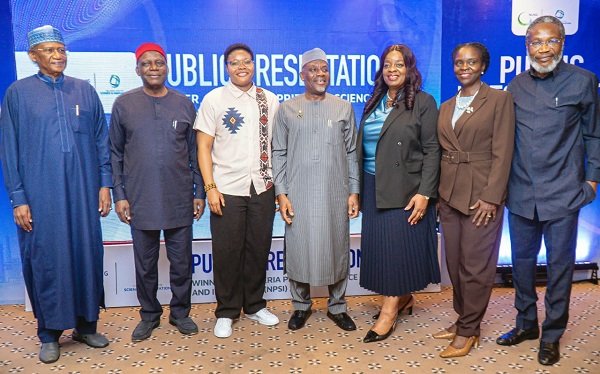
Akoda, an artificial intelligence researcher and founder of GenScan AI, has emerged as the winner of the 2026 Nigeria Prize for Science and Innovation, sponsored by Nigeria LNG Limited (NLNG), earning the prestigious $100,000 prize for developing GenMRI, an AI-powered technology designed to dramatically reduce MRI scan times.
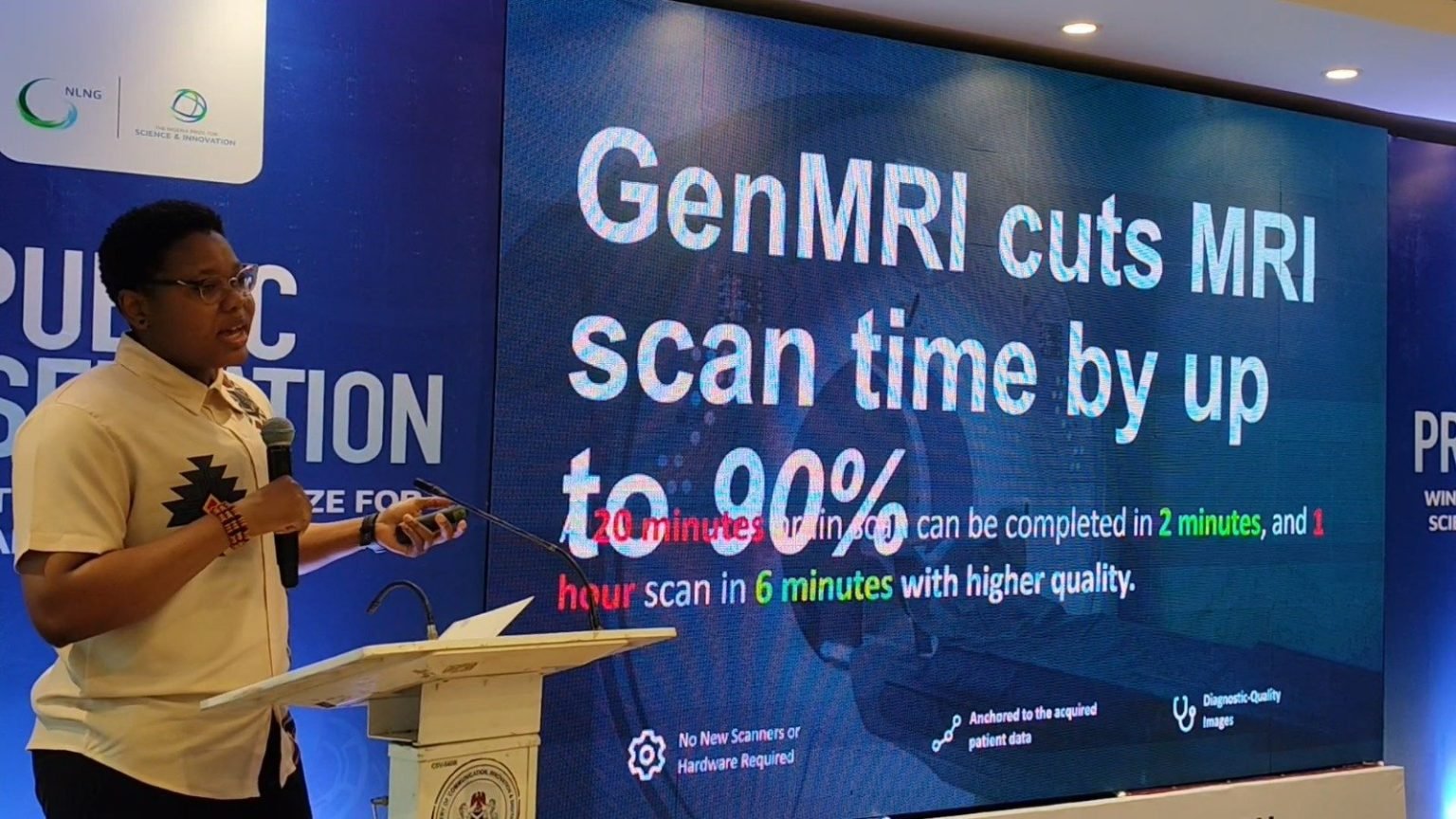
Her innovation, which uses artificial intelligence to accelerate medical imaging without requiring hospitals to purchase new scanners, could reduce MRI scan duration by up to 90 per cent — turning a 20-minute scan into about two minutes and an hour-long procedure into just a few minutes.
But behind the technology is a deeply personal story.
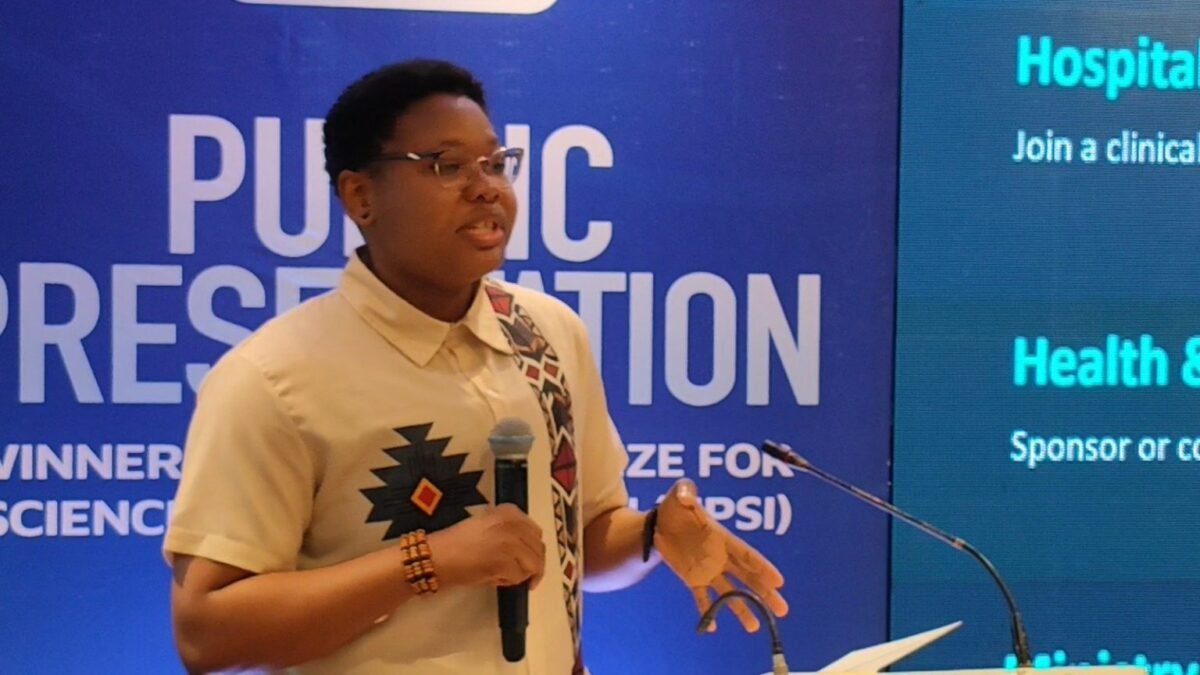
Speaking on Monday during the public presentation of the Nigeria Prize for Science and Innovation at Transcorp Hilton Hotel in Abuja, Akoda recalled the experience that inspired her journey.
“About three years ago, an elderly loved one suffered a stroke, and if you have ever experienced that, you would know that every second counts. He needed an urgent scan. The queues were long, and his condition deteriorated. Soon after, he passed away.”
She said the tragedy exposed a wider problem affecting millions of patients around the world — delays in accessing timely diagnosis.
According to her, stroke remains one of the leading causes of death globally, with millions of people affected every year. In Nigeria, she noted that at least one person suffers a stroke every minute.
Beyond stroke, she explained that conditions such as cancer, accidents and other medical emergencies often depend on how quickly doctors can obtain accurate images to make decisions.
“Ultimately, we are working towards earlier access to diagnosis,” Akoda said.
Turning Artificial Intelligence Into A Healthcare Solution
MRI scans are among the most important tools used by doctors to detect diseases and injuries. However, the process can be stressful for patients and expensive for healthcare providers.
A typical MRI scan can take between 20 minutes and one hour, depending on the medical condition being examined.
During that period, patients must remain completely still inside a narrow machine. Any movement can affect image quality, forcing patients to repeat the procedure.
For elderly patients, children and critically ill persons, the experience can be even more challenging.
Akoda explained that hospitals face another major obstacle — the cost of MRI equipment.
A high-quality MRI machine can cost between $1.5 million and $3.5 million, while the machines also have limited operational lifespans.
Rather than requiring hospitals to spend millions on additional scanners, Akoda and her team developed software that works with existing infrastructure.
She described GenMRI as a technology that allows artificial intelligence to reconstruct high-quality medical images using significantly less scan data.
“Imagine you have a picture puzzle of 1,000 pieces,” she explained. “The conventional MRI scan collects all those pieces. What we have done is teach our AI system to take fewer pieces and still rebuild the full diagnostic-quality image.”
A Technology Tested Beyond The Laboratory
Akoda said the innovation was developed from research that began during her postgraduate artificial intelligence studies at Imperial College London.
The technology achieved up to 99.7 per cent similarity with conventional MRI scans and produced peer-reviewed research publications.
However, she said the real test was whether medical professionals could trust the images.
Working with consultant radiologists at Buckinghamshire NHS Hospital in the United Kingdom, GenMRI images were assessed alongside conventional MRI scans without doctors knowing which was produced by the AI system.
According to Akoda, the radiologists rated the GenMRI images as diagnostically equivalent to conventional scans in all assessed cases.
This, she said, demonstrates that faster imaging does not necessarily mean reduced quality.
A Nigerian Innovation With Global Ambition
The breakthrough has attracted support from innovation institutions, including Innovate UK and the NHS Clinical Entrepreneur Programme.
The technology has also gained interest from clinical partners in the United Kingdom, United States, Kenya and Nigeria.
In Nigeria, Akoda said the company is working with healthcare partners, including EKO4 Diagnostic and Medical Centre, towards clinical pilot programmes and regulatory approval.
She appealed to government agencies, investors and healthcare providers to support the deployment of locally developed technologies.
According to her, Nigeria must avoid the habit of waiting for innovations developed abroad before adopting solutions that can address local problems.
“There is this elephant in the room where innovations are developed and we want to roll them out, but unfortunately Nigeria becomes an afterthought. We want Nigeria to be a priority.”»
A New Generation Of Nigerian Scientists
Akoda’s achievement carries another historic significance.
She is the first woman and first millennial to win the Nigeria Prize for Science and Innovation as an individual recipient.
The 2026 edition focused on Innovations in ICT, Artificial Intelligence and Digital Technologies for Development, attracting a record 237 entries from researchers and innovators.
For Akoda, however, the award is not only about recognition.
It represents a commitment to ensure that fewer families experience the pain of losing loved ones because medical help arrived too late.
Her message is simple: technology should not only advance society — it should save lives.
“No one should suffer or die because of a delayed diagnosis. That is what we believe. That is why I built GenScan AI.”